Showing posts with label England. Show all posts

Monday, November 25, 2024

Glamour in Glass

 Glamour in Glass is the second book in the Glamorist Histories books by Mary Robinette Kowal

"In the tumultuous months after Napoleon abdicates his throne, Jane and Vincent go to Belgium for their honeymoon. While there, the deposed emperor escapes his exile in Elba, throwing the continent into turmoil. With no easy way back to England, Jane and Vincent's concerns turn from enjoying their honeymoon...to escaping it. Left with no outward salvation, Jane must persevere over her trying personal circumstances and use her glamour to rescue her husband from prison... and hopefully prevent her newly built marriage from getting stranded on the shoals of another country's war." 

I read this back in May of 2023, a year and a half ago, and boy do I remember being upset by it. 

Plot and Theme: I got half way through it and skimmed the rest to see if it got better. It got worse. Jane's "trying circumstances" were that she was pregnant and while pregnant she isn't supposed to use glamour otherwise she could lose the baby. So her fight over her own independence and freedoms vs the... scariness of soon becoming a mom and not being able to do something she loved doing for nine months. I get it. Putting things down for a time because of children can be hard, but that amount of selfishness and practically intentionally aborting her baby did not set well with me. To have this be the major plot point of the book made me put this down. It wasn't a "she will persevere or think of another way around the problem of her husband being in prison and needing to help him escape." You aren't all Glamour girl! Use your brain and come up with another plan. Don't have the major plot be, kill the baby to save the husband. And the fact that she felt so relieved to be rid of this burden made me sick.

Setting and Writing Style: It has been a minute since I read the book, but from what I recall it's setting and the way it was written was pretty good. I enjoyed the set up of Napoleon breaking out and the French country side being up in arms one way or another. I don't remember being upset by the way Mary Robinette Kowal wrote it, just the themes and plot. 

Spice: The fact that Jane gets pregnant means that there was something going on behind the curtains, but that is where it stayed. Which is perfectly fine with me. When it comes to Jane and Vincent's relationship, I remember there being problems with the fact that he was away all the time. That's not how you spend a honeymoon, dearies. Yes, they've both got to work, but besides one scene where "the curtains fall" that is all the romantic encounters I remember. The rest of the time they seemed extremely mad at each other. Such a happy marriage. 

Characters: From what I recall the characters were actually decently developed. They had differing opinions and backgrounds. Even the side characters had thoughts about Napoleon and how the previous war went with England which was kind of refreshing. I don't recall any Mary-Sue's which is great. Jane was having some major growing pains and she chose extremely poorly in my opinion. She ended up being a character that I couldn't get along with and wasn't someone I cared to read about anymore. 

Overall: Never again. I'm done with Mary Robinette Kowal. Miscarriage is something I've dealt with more often than I would like to and abortion is not something I support. It was her relief at the end that killed it all for me. Apparently she gets pregnant in another book and is all happy hunky dory, but that seemed like it was even more of a reason why I wouldn't want to pick up anything else Kowal wrote. 

Friday, January 27, 2023

Jane Eyre

 Apparently it has been quite a few years since I've read or listened to Jane Eyre, and I'm glad I made this journey again. 

Young, plain Jane is orphaned. Forced to live with her uncles wife and children, she is abused and neglected. Her strong will and temperament are then bridled at Lowood Academy. There she makes friends with the teachers and other pupils. Death pays a visit on a large scale at the Academy, which brings sorrow and a heightening of the presence of God into Jane's life. Fully grown and educated, Jane decides to take her academic learning into a career as a governess. She finds a position at Thornfield Hall and enjoys the small society there. With only the master of the house, her pupil, and the servants in attendance, she begins to find a home at Thornfield and has found a friendship with the master of the house, Mr. Rochester. Their relationship starts to become more than simply governess and master, and he eventually proposes marriage. She begins to let her bridled passions and true character unwind. But fate has a strange turn and all is not as it seems at Thornfield Hall. 

There are reasons why this book has been well loved for nearly 180 years. The characters with their foils, the gothic mystery, the fairytale, the love story, view of God, and symbolism are amazingly well done. 

Jane has probably become my favorite character, almost ever. She is bold and brash where and with whom she finds it appropriate. She has her fault of probably being too easily led, by those who mean well and those who are manipulating a situation -- though part of me wonders how much of that was do to the time and what was expected of women 180 years ago and how much was her character, I don't have an answer yet on that. I love how she is religious and learns, as we all should, about forgiveness and charity and service to others. Those aren't often what is written about now without seeming pompous or prudish. I love how she stands up for what she believes to be right even though it hurts her greatly. She chose not to stay with Mr. Rochester for important reasons. She holds her ground with Mr. Rivers and, though she comes close, she doesn't recant her opinions and holds her ground. She knows what she wants, especially in the long term, and doesn't let herself be trodden on or manipulated by others feelings and wants. She is and has a strong character! I mean, come on! She says, "Oh, I will give my heart to God. You do not want it!" Bold as brass! <3 Love it. 

Mr. Rochester is an interesting character too. Similar to Jane, he's not handsome (which is cool because how many characters are often portrayed as the most beautiful person ever in the whole world or time? It's unrelatable for a large portion of society.) He's loud, has strong opinions, and is rather grumpy (though given his circumstances, it's understandable), sometimes I think he talks more than Jane -- which does make the relationship they have in the beginning a little hard to believe, though that might just be because I need to pay better attention -- but he sees that she is smart and thoughtful. He is proud, which is his biggest fault, but throughout the course of the story he finds himself extremely humbled. I love the way Charlotte Bronte words his devotion for Jane. His love is palpable on the page. It is beautiful, kind, and honest. 

The Gothic and supernatural elements of this book are the best thing for it. It gives the ghosts the prowl the Hall so much more life and vivacity than I think could have been done in any other setting. It gives strong tones of Northanger Abbey by Jane Austen -- though Austen was a satire of Gothic literature in her time. This Gothic atmosphere only ever lends itself to the story and bolsters it up. 

I think the mystery of Thornfield Hall is what most people remember of Jane Eyre today. "Vampyres" and fires are pivotal points in this story and they are so well written. Just... *chefs kiss * it's so well done. 

I have no problems with this book. It was well written. The writing, though older and potentially longwinded, is elegant and only give to the story. It is written in a "more modern" tone as opposed to even Jane Austen which was written 30 years previously which made it considerably easier to dive into. 

I'm extremely interested in finding the many depictions of this story that have been produced. I know plays have been done and I own a movie, but I have a need for more. 

I love it. I love it. I love it. 

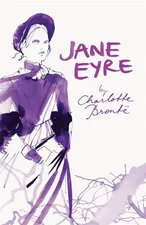
In finding a cover of Jane Eyre for this post, I was in awe of how many beautiful (sometimes funny) covers were published. Here are some of my favorite ones. 


Some of these covers, though, make no sense whatsoever or are just completely inaccurate.


He looks really creepy here.... Um... Excuse you, dude! 


I mean, what is this? It definitely screams 1840s Gothic Classic to me... right... 

Monday, August 9, 2021

Emma

 Jane Austen's Emma is a classic. 

Emma considers herself quite the matchmaker. With not wanting to marry at all and being the second daughter to the wealthiest man in the town, she has found it a fun game to meddle in the love lives (with the best of intentions) of the people around her. She was able to get her sister and their wealthy neighbor to marry as well as her governess and an older gentlemen in their neighborhood to marry as well. Now that they are married and she's realized she's lonely, she finds a new friend in Harriet Smith, a young girl with not much known about her background. Emma has her eyes on Mr. Elton, the towns clergyman, for Harriet, not the farmer Mr. Martin. Emma enjoys influencing people and can make a mess of things, which her ever present neighbor Mr. Knightly is more than willing to let her know. 

I took a Jane Austen class in college and, upon seeing the length of Emma and the fact that I didn't much care for the main character, I moved on to the next book on the list that I needed to read so then I might actually complete one of the assigned books that semester. (It didn't happen, fyi.) I watched the movie with Gwyneth Paltrow to get the basics and moved on. 

Now that time restraints and pressures to read it were off, it finally got back to it and still struggled. I tried it but was daunted by the text and characters. So I decided to listen to the audio book and I DID IT!! 

I knew the story of Emma from the movies and multiple variations that are out there. They all have their pros and cons, but the 2009 mini-series and the 2020 are my favorite. Clueless was pretty awesome too. Knowing the story I think helped with the actual text, but even listening was somewhat hard to digest at times. As opposed to Pride and Prejudice where there was a lot of conversation and dialog, this book seemed to get bogged down by exposition and describing what was happening instead of letting us be there. And when there was dialog between characters, the lack of discourse between characters and major monologues (such as that of Mrs. Bates, which does fit her character, obviously) would have got me stuck if reading it off the pages. This problem is one that early novels  have or what makes them dramatically different from the novels of today. The writing is just such a struggle. 

In the end, though, I did enjoy the book. I enjoyed the communication (or lack there of which causes a bunch of conflicts) between the characters. Specifically between Mr. Knightly and Emma. I also liked how kind and compassionate they all were towards each other. Mr. Woodhouse is wealthy, yes, and full of peculiarities, but all the characters are sensitive to his oddities and willing to help him and avert his anxieties. Between the 2020 and 2009 variations of Mr. Woodhouse, I enjoyed them both--probably my favorite character in the 2020 version. 

The people in Emma were real. I think think this is an applicable statement for pretty much all of Jane Austen's stories. There is a realness about them, if not their circumstance, then their attitudes and actions. That is, what I believe, Jane's truest strength in her writings is. 

Read on, Jane-ites. Read on! 

Wednesday, April 28, 2021

1984

 I've heard more and more people mention this book and figured while I was trying to be productive, I could listen to it. 

Winston is living in what was once England in approximately the year 1984, but then again there is no real way to tell which year precisely. Oceania (in the past known as North and South America, the southern half of Africa, southern tip of India, and Australia with the surrounding islands) is ruled by Big Brother. The government that rules everything with a hard fist. He sees everything, hears everything, and is working on even knowing your thoughts. Oceania (much like Euroasia and Eastasia, the only other countries and governments in the world) is productive in resources but it's population is destitute, there aren't enough of anything to go around. War is constant. History is what the government says it was. Winston is one of those people who help change things in all media so then the things that Big Brother doesn't want you to see, remember, or think, you won't. No amount of research into people, places, events, or things exist unless Big Brother says it's okay. And any thought of rebellion against Big Brother can lead you to "thoughtcrimes" where you will be tortured while interrogated and then confessing to anything and every thing. You don't want to get caught in your rebelliousness or you will be interrogated and will eventually confess and then normally die. 

This was a very deep story. One I'm okay with only reading once. It was well written and got the horrible world where Winston lived. It was very well thought out and soooo depressing. It is not a light read in any sense of the word. Torture and heavy mental business was a lot. 

It was eye opening to how a potential could happen. While it might not be as bad, the knowledge that it was so well thought out and could at one point be done or has been done is rather scary. The idea that Big Brother is watching and listening to everything is rather real with so many computers, phones, and other gadgets with cameras, GPS, and mics, let alone the social media getting out thoughts down. Big Brother is here. Government officials not having our best interests at heart and only want power for power's sake is something I know many people worry about. And I know many who feel they can't believe news media in general let alone history books given to kids today. I even remember thinking back in high school how we never got to the present in history classes. We spent so much time studying the Romans and Greeks, the Revolutionary Wars (USA and others), the WW's, and they we would pretty much stop. We never got really into the Cold War and most definitely anything after. I understand the feeling of missing out on history. It raises the question of how much Big Brother is here already. 

It also reminded me very much of We by Yevgeny Zamyatin. A very similar book though that one was a little harder to read in that the narrator is an unreliable one. Though a book still interesting to compare the two books.  

I think it is a good idea for everyone to read though or listen too. Not for the story itself (though it was well written and informative) but for the thoughts about it. 

Monday, December 21, 2020

Beauty and the Clockwork Beast

 A steampunk  proper romance of Beauty and the Beast. Instead of 3.5 I'd probably give it a 4. It was descent enough but not a favorite. 

Lucy is a botanist of the Botanical Aide Society and is on a little trip to visit her sick cousin, Kate, at the shrouded Blackwell Manor. Kate is married to the Earl's brother and the Earl is mysterious, scary, scarred, and not a people person though he's in high society. There has also been talk of vampire attacks, ghosts, and troublesome automatons sabotaging their wards. Why is Kate sick and is this Earl as scary as rumor has it? 

This is a Beauty and the Beast retelling, so we know how it's going to end otherwise the readers would be disappointed. While it is a retelling, it is different enough to enjoy the story and be engaged in the differences and want to know what is going to happen next. The supernatural elements, especially the ghosts that made their presence known, were fun and brought the needed flare for this ever present and popular story. It also gave it that edge at the ending to give the climax a "realistic" feel. 

I do wish that re surrounding cast had more differences so then I could actually tell them apart. This could be do to the fact that I was listening to it while doing other things and some of the people and names got mushed together, but there were a few men in particular that I couldn't keep straight so I kind of gave up. 

It is a proper romance, so it is clean and Propriety was important and not sullying one's reputation is high on the importance scale. However, there were many times when Propriety was not held up (my lit. historian is showing) and sandal should have ensued. So much 'non-walking' time alone and in bedrooms and things. Brings tension, I guess, because they are keeping it clean, but it was kind of odd especially because they did bring up propriety and reputation often. But no one else beside Lucy and Miles brings it up. I do kind of wish there was more conversation between others and the two love interests more than the "Gaston" character. 

It was pretty well written too. I'd probably read through it again eventually and will be listening to the next book. 

Thursday, September 24, 2020

A Discovery of Witches

 A Discovery of Witches *sigh, and not in a good way* 

Diana is a witch with a lineage that goes back on both sides to Salam, Mass. c 1600. Matthew is a vamp who has been around for a millennia and a half. She is super powerful though doesn't like to use her powers because she considers it cheating and she wants to get her PHD and other studies the "normal way." He is looking for away to save his kind and stop all these murders that scream vamp all over them. Then there is also the big bad "boss guys" who say they can't get together because... I didn't get that far. 

It... *ugh-sigh* The first reason I gave it a 2 was because it was beyond long winded. Setting and descriptions of everything took forever, and I was reading an audiobook where most of the time that doesn't matter. And I'm all about a beautiful setting and wonderful descriptions, but there was so little poetry behind it all and it took For-E-Ver. The 600-ish pages could have been dropped by at least a quarter if she had been more choosy as to what was needed for the reader to know what was going on. It's a brick and feels as heavy as one. Plus, tea and wine. Tea and wine. Tea and wine. And descriptions on every scent and whiff of tea and wine. O.O UGH! 

My second problem is him. If you go for a "Beauty and the Beast" kinda rage problems but miss the whole story of B&B, you just get a very angry guy who hasn't learned to control his temper in 1500 years. That's a long time. Honestly, if he hasn't learned it by now... If she does anything wrong, especially unknowingly (because "forget everything you thought you knew about vampires"), he practically jumps down her throat. "How dare you do this thing which you didn't think was bad! I'm not going to explain how that was actually kinda rude; I'm just going to yell and pretty much throw a tantrum because I'm only mentally 3." Okay, that was probably a bit mean, but it happened. 

Matthew has this over-protective thing (fidgety feeling) almost out of no where and likes to watch her sleep also and other weird stuff that reminds me heavily of another vamp that sparkles. Many of the characteristics that many people disliked about that vamp is the same thing Matthew has. Red flags of all kinds pop up. Then Diana who is supposed to be this warrior-princess of awesome becomes so passive mess every time he's around it seems. Again, possibly an exaggeration, but I got through about half the book. When he's around, almost all of her brain smarts and goes away. And yes, it's cool that suddenly he became friends with every single person of scientific importance over the last 1500 years, but come on. Let some of her awesomeness shine out. It didn't so much. 

And while I didn't finish it, I did look up the rest of the plot on the interwebs and saw that they made a tv series out of the book and it's two sequels. The big baddies are this counsel who won't let inter-species relations happen. But they really want to, but they can't because laws, but they'll probably do it anyway. There is also supposedly time travel in this book toward the end and it gets to the point where it seems like there is just too much going on. Blood science, problems with reproduction, inter-species relations, "I'm too powerful and don't know how to use it," "Yes we should" "No we shouldn't" dilemma, yoga class gets in there too, history class for the ages, and time travel all with an over abundance of description. 

It's too much. 

I don't really want to read a fanfic written by a Twihard mom who, though clean (I will say that, so far as I read though the series trailer will dispute that), wants a Twilight fix. ((Not to blow up on Twilight or hate on Stephenie Meyer, I just don't think her books were written as well as they could have been, and I wish she'd step away from it instead of writing another Twilight novel "but this time from Edward's point of view" (There I said it). Maybe I'm just upset because she didn't choose Jacob in the end? Who knows?)) Twihard mom's might like it, I do not. 

Moving on to the next book. 

Tuesday, August 18, 2020

Guernsey Literary and Potato Peel Pie Society

 This is a super cute book that is for anyone wanting to read something sweet. 

Written in letters after the end of WWII, the story is about a woman named Juliet who gets a letter from a man on Guernsey who came into possession of one of her old books by Charles Lamb. They begin correspondence and she finds out that in order to deal with being occupied by Germans during the war, this small group of odd neighbors begin a literary society--with an interesting story as to how it started and its name. The Society has continued on after the war and from the society begin to open up about their experiences in the war. Juliet was also a writer for a local British news paper and wants to write a book with their collection of letters. Of course, Juliet has her own life back in London, men, writing, friends, post-war happenings. 

It is a great story with full characters, many of them with fascinating stories. This is one of the best parts of the books. So many different people with different points of view, with different happenings, ways of coping with trauma, and different ways of being heroic in times of difficulty. 

I also greatly enjoyed the romance part of it. Rich American guy who is charming and witty and a lowly country boy from Guernsey. A little love triangle without being high school dramatic. They are adults here and act as such, for the most part. It wasn't heavy on the sappy romance, which was good, but there was sweetness and a comedy about it. 

There isn't really anything that I dislike about it. It was written well. However, the audio book that I listened to for it was misleading. The gentleman they had voicing the younger men wasn't that young sounding. So the younger men sounded like they were in their sixties instead of late twenties, early thirties. When she started liking a certain person, I was concerned that she liked the oldest gent in the literary society. It wasn't until I looked at the Netflix cover that I realized, "Oh, he's much younger" which was a relief. 

I very much enjoyed it and will reread it again. I've also heard the Netflix movie did it justice, so I'm going to be taking a look at that soon. 

Wednesday, June 24, 2020

Harry Potter and the Deathly Hallows

Number 7! Ah, the tears. Only good writing works this way. 

Harry, Hermione, and Ron aren't going back to school... at the beginning of the year anyway. They are on orders from Dumbledore to find Voldemort's Horcrux's and destroy them. Harder said than done. Between running away from Death Eaters, searching, not knowing where to go, infiltrating the Ministry while Harry is the most wanted man in the country, and then realizing that the Deathly Hallows are important too... they've got their hands full. 

This one is my first legit read though of the book. I've seen the movies a bunch of times and listened to the other books on audio, but this is a first. I very much enjoyed it. 

I think one of my favorite parts was Kreacher's Tale. You really feel for him and are reminded that every nasty person has a back story and often times if you take the time to get to know them or their story, they'll turn out to be a decent person. Not all the time, if they choose to be that way, but there is potential for everyone and that most of the time all they want to be is understood. Kreacher is awesome and I love how he ends up leading the House Elves at the end. 

I do wish though that we had been able to spread the narrative a little. Instead of solely watching it through Harry's eyes, to have gotten  other's points of view. Especially during the Battle of Hogwarts. Throughout the series we've loved everyone that is in Hogwarts at the end--the good guys anyway. I wish we'd gotten more of the individual battles for Lupin and Tonks, of Kingsley, Hagrid, Molly and Arthur, and all the others. Obviously Harry can't be everywhere, but I'd have loved to get POV changes. Even POV changes when we weren't at Hogwarts at the end. To know more about what the Weasley's were doing, what the DA did in an attempt to steal the sword, Fred and George when they were still manning their shop. And most definitely more at the end. To see how everyone coped or didn't with the losses they received. Even if it was just bit and snippets of weddings, of internal changes, of grief... A page. Three paragraphs. A small bit of dialog. Something just a bit more so then we can close with them and have a more finite resolve. 

But boy was it a great book. Before reading the series, I knew that there was a giant fandom for the Wizarding World. I know some fandoms can go crazy (I'm looking at you Supernatural) but now I understand why. The books were great, well done, and well made. In my opinion, there is very little lacking in the series. No, Harry Potter is not a happy book, but it is one that discusses many things that touch many people in many ways and hopefully helps us to grow. Those books are the best ones to read. 

It will probably be a series I'll reread like so many before me. Enjoy. 

Monday, June 8, 2020

Harry Potter and the Half Blood Prince

 
The sixth installment of the Harry Potter series is one that I enjoyed greatly. 

Harry goes back to school, a fair bit lighter than in previous years, hoping that things can find a good normal. Starting classes with a new potions teacher with a new and intriguing book, Snape taking over D.A.D.A., relationships bloom and flounder, and new lessons from Dumbledore on the history of the Dark Lord. Normalcy? At Hogwarts? Never. Draco is up to something and everyone thinks that Harry is off his kilter. But is he?

As I said, I enjoyed this book. I busted through it very fast (beings smaller than Order of the Phoenix does that) and was enveloped in the memories that Dumbledore showed Harry. Getting to know the enemy helps to destroy him, right? His background was something missed in the movies and it wounded the story it presented. 

I liked that it had gone from dark and death oriented all the time, back to something that resembled the first four books (before the ending of number four anyway). It was lighter and a last pick me up before the final battles of book seven. While the ending here wasn't happy, betrayal and death happens, it--over all--had a lighter tone. There were very tender moments where I had to choke back tears so then no one would see me crying over stuff that I knew was going to happen. Well written moments that deserve applause in a good hero's journey. 

Well done, Rowling. Well done. 

Wednesday, June 3, 2020

Harry Potter and the Order of the Phoenix

Harry Potter and the Order of the Phoenix is a very large book. Sometimes they can be intimidating, but I've found that often the large books are some of the best. (Brandon Sanderson is a great example of this.)

Harry is distraught. After witnessing the murder of a friend and fighting Lord Voldemort himself and having the whole wizarding world calling him a liar, he has every right to be. His summer is silent and no one is telling him anything. He joins his friends at Sirius Black's house and finds out there is an Order of the Phoenix that he's been left out of as well. Then when he gets to school their new D.A.D.A teacher is psycho. No answers. No Dumbledore. No help. No hope. This year really sucks. 

The characters are amazing here. I don't know of any fan base who simply hates a character as much as they hate Umbridge. Professor Umbridge is hated beyond any fictional character I know (except for maybe"F-Moash" from Brandon Sanderson's Stormlight Archive.) She is one that we obviously just detest and some consider more of a villain that Voldemort. 

I think Rowling did a great job at showing that Harry was angry. #Angst or what have you. I remember hearing about how this was a bad book because Harry was constantly complaining and angry. They blamed it on Rowling being pregnant and therefore hormones coming out in her writing. I don't believe it's credible--if she was pregnant during that time, I don't think her hormones made Harry hormonal, he had his own problems (and teenage hormones) to worry about. Yes, he was angry. Yes, he felt like he had no one to confide in or that was willing to confide in him. He felt alone. He'd just seen death and been called a liar by everyone and everything that had lips aside from his friends and members of the Order who aren't telling him anything. Harry is going through a depression and instead of closing up, which he sometimes does, he lashes out. He's getting beat down from every side and feels like he can't get up, though he keeps trying. Rowling did it well. Depression, anger, misunderstanding, hate, fear, they are all things that are prominent here but realistic. It's sad Harry lashes out at his friends who are only trying to help him, but "they don't understand" and it makes it hard on everyone. 

Just as the books are, the plot is thickening here. More and more things are happening and lots are going on behind the scenes. 

I think it's very well written and the characters help pull this one through. 


Wednesday, April 22, 2020

Harry Potter and the Goblet of Fire

This book was dramatically let down by the movie. Just saying.

Harry Potter and the Goblet of Fire was comical and actually got me to sniffle with tears in my eyes. Cedric Diggery is actually a very awesome person (hence the tears) and Mrs. Weasley is by far my favorite character in the Harry Potter series. Period.

Harry, before returning to school, has crazy dreams, his scar hurts, goes to the Quiddich World Cup and sees Death Eaters and almost get stunned and put in prison. Hooray for the summer holiday! When school starts, the school is informed that they will be hosting the Triwizard Tournament. Someone puts his name in the drawing for it and is considered a champion in the Tournament. Is someone trying to kill him again? Obviously, the answer is yes. He has to survive the tasks and school ground and school assignments. Go Harry! But, of course, dark forces as encroaching upon the quickly dwindling happiness that happens at school.

The characters are beyond brilliant. J.K. Rowling does and excellent job with her character development. The ending was very powerful where we were just as shocked with Harry about what happens in the graveyard, then have just as much heart ache as Harry does when realization sets in (particularly for me with Dumbledore's speech at the end), and I defiantly felt the love of Mrs. Weasley who, like I said, is my favorite character. We were right there, with Harry, feeling the same things. But then everyone else there was growing too. Ron and Hermione growing as people throughout the World Cup and the Tournament. Friendships are tried and unregistered love is too. Then others as well are given enlightening moments that make their character bloom. Neville, I'm looking forward to you. Obviously.

It is a long book with many things happening, and the fact that they are all interconnected (either in series or simply the awesomeness that is the book) makes them a great read. Plot is very well done here with a major twist at the end for those who are reading it for the first time. There are long, almost info-dump, of explanation at the ending between many of the characters but they were very needed and did explain so much. Rather similar to a "so who dun it" moment at the end of a mystery novel where the detective explains or the bad guy confesses.

In the end, it was a great book. I finished the last 25% in a day (hooray for quarantine). It was very binge worthy. I'm taking a quick break from Harry Potter (mainly because my husband is asking me to read something), but will be back for Umbridge soon. Bwahaha. I can't wait.

Wednesday, October 2, 2019

The Girl on the Train

The Girl on the Train is a National Bestseller and supposedly pretty good. I somewhat disagree. I can see why people would like the book, I however don't care for it.

The book is about Rachel who's had a mental crisis and is trying, very poorly, to function. She rides the train to work every day and at a particular stop, she watches this couple whom she deems perfect. They must have the perfect life. She's fascinated by them because her life has gone down the drain since her divorce to her cheating husband. She does drink and often blacks out, not being able to recollect anything whiles she's drunk. Megan who is spotted having an affair. And lastly, Anna, who is the woman Rachel's husband had an affair with and is now currently married to. Megan is suddenly found dead and after a drunken blackout, Rachel is trying to find out what is happened on the night she can't remember. Did she do it? Did she see who did it?

This is the story with a very unreliable narrator. Rachel is on the verge of mental snappage which makes her testimony hard to find solid footing in, which is a way to make this fun. Unreliable narrators bring twists to the story that otherwise wouldn't be there or it wouldn't be nearly as fascinating. This was the point that drew me in and kept me wanting to listen.

However, I didn't finish the book. It had a few too many and strong swear words for my liking as well. It was also more dark than I really wanted to read. I don't get drunk, I don't drink at all. I don't find it as fascinating as others might. I don't have a point of reference for it, not that I really want one either. Then there is the concept of affair this and that and having it constantly swirling around the page. I don't read for that. Getting cheated on isn't something I like focusing on. To have it be so constant, has put me off.

I'm sure it's a good book, for other people. Not me.

If others don't mind the concepts that are very prominent here, then they would probably enjoy it very much. Have at it. It was written well with good characters and an interesting concept. It's just not more me.

Friday, September 6, 2019

A Great and Terrible Beauty

I've had this book for years and only finally was able to read it. And I have mixed feelings about it.

in 1895,Gemma witnesses the murder of her mother, the murderer was some kind of shadow. How can she explain that to anyone? Months pass and she is sent to live in an all girls school and learn how to be a lady and curb her boisterous tendencies. Making friends is hard and making enemies is far too easy. To top it all off, shadows and ghost stories haunt her. She finds a diary of a girl who used to go to the same school and saw the same things she did; this girl had the same odd powers Gemma seems to be acquiring. What is is going on and who is the strange boy who followed her from India all the way to England?

I really liked the historical representation that was depicted her. A life of a lady was not an easy one and many felt silenced and purchased for potential wedding contracts. The idea of "lay back and think of England" instead of making love to a spouse is one of the many ways that this is shown here--nothing graphic though I guess there is some nudity which is probably unneeded. The idea of being a quiet, proper "lady" is very prominent and has many of the girls feeling stifled. So before all of their independence is snatched away they will occasionally do things that would get them in serious trouble if they are caught: necking is a gypsy boy, stealing the priest's wine/whiskey reserves, getting up at all hours of the night, going into the woods for meetings/gypsy fortune telling/whatever else. Then Gemma introduces her strange power to some of the girls and more craziness happens. But the idea of being stifled, silenced, and putting on a fake smile with even worse conversations only about "the weather and the queens health" was something that they had to deal with back then and now too in some instances though not as dramatically. It's sad and Libba Bray portrays that very well.

I think the characters were well developed and each was different and developed enough that I understood. I enjoyed learning about them and at times I felt very sorry for them. The characters were a very strong reason I finished the book.

That being said, I almost didn't finish. I am not an occult fan. This had a feel of the Salem Witch Trials to me, tarot cards, talking to the dead through medians, sacrifices to give black shadow/spirits power, and other witchy things was turning me off for a lot of it. I don't read it, because "bad ju ju feelings" are a thing and I don't need it around me. I did finish it though because the plot was very good. It was a very engaging read that had me turning pages quickly. I finished it in less than a week.

It is a good book and written very well. The reason I gave it a four instead of five stars would be because of the occult theme and the fact that it got a bit darker than I wanted. I can see this series being a good one that has many people very engaged, but as this moment I'm not going to be picked up the next one, sadly.

Tuesday, August 20, 2019

Sense and Sensibility

Jane Austen's first published work Sense and Sensibility has been read over and over again for more than 200 years. It is a classic that has been loved and survived the years because it's a good book full of vibrant characters and an engaging story.  

After the death of their father, Elinor, Marianne, Margaret, and their mother are forced out of their home to live in a cottage in a different county while their half brother and his wife take over the family estate. Their time in this cottage, making new acquaintances and enjoying the countryside, is quickly changed to lovestruck conversations when Marianne is saved by a young gentleman and love blooms. For Elinor though love is a trying thing when she learns that the man whom she admired is in love with someone else whom she also is acquainted.

I think this book has stood the test of time, unlike many of the other romantic stories of the time, because it hits home more than some of the others. The things that Elinor and Marianne deal with, loss of father, home, loves, sickness, surviving monetarily as well as plain surviving your family relations and acquaintances. These are things that we all struggle with at one point. We read things that are often similar to our own lives via theme or circumstance. Sense and Sensibility does that, even to today, which is fascinating. There have been many critics, papers, articles, and readers of this book over the years and if you search them out can find a lot of enlightening information and opinions.

I like the play on opposites that is presented here. Elinor is the sensible one in the family (rather logic based) and Marianne is full of sensibilities (and can often let her emotions run rampant). Willowby vs Colonel Brandon, The Ferrar's brothers, John Dashwood vs Sir John Middleton, even the rolls that men play vs women and how they are portrayed (hunters vs mothers). The way Austen plays with opposites is engaging and can be thought provoking.

The characters, though, aren't only opposites of one another, but they are their own people. They aren't merely a stereotype but do have their own personalities and quirks that make them unique.

This, again, is an older book. Classic for a reason, but not everyone's cup of Sleepy Time tea. It's language is different and more wordy than what present novels give. There were times when I needed to put it down because my head was starting to ache or I couldn't pay attention because of how the language was constructed. It is what it is. I also have the Oxford World Classics edition which honestly read more like a textbook than a novel which might be published in a different format. But it did have a lot more insights, critiques, and definitions which were very much helpful and fun to look up without having to go very far. It also had a good introduction by Margaret Anne Doody who has done many other critiques and papers for the Oxford World Classics company. Again it was very enlightening to aspects that I didn't see my first "read through" during college. In the end, be forewarned that it is older, wordy, and "harder" to read for the "modern" reader.

Read it. Enjoy it. Take it slow if you need and please go and find articles about it. They can be very enjoyable.

Tuesday, July 23, 2019

The Watson's

I have learned now that it is important to read through all the introductions first in a book. They can be very helpful.

When I came across The Watsons at the end of my Northanger Abbey book, I started reading it just as I did Lady Susan not realizing that The Watsons was an unfinished work, almost along the lines of a blip from one of her other stories.

Our main character is Emma Watson who is invited to go to a Ball by a neighbor. She is set apart by her family as she looks over her invalid Uncle and doesn't get out much. She is given a diagnosis of the people going to the Ball and told whom to look out for. She is given offers to dance, seen by many, and gets the basic notions of those around her. There are visits after the Ball along with her family coming into town and trying to get her to come back home instead of enjoying the solitude and pleasant companionship of her Uncle.

It is only about forty pages and doesn't have much in the way of extended plot, but, as I said earlier, it's not finished. I think someone described it as a scribble. There is definite possibility for this story, and it resembles a bit of Pride and Prejudice in some aspects, but it is it's own story.

I found it very funny that the main character's name is Emma Watson, though I'm sure the actresses parents didn't know about this story. It made me happy. As for the other characters, there were so many in such a short period of time that it was hard to keep some of them straight. Few had solid characteristics in my mind that it was hard to keep many of them separated. I would have liked to read more about this particular story, but, alas, no such luck.

I did really enjoy one part of the story where the gentleman who would, if the story went on long enough, and Emma sat somewhat awkwardly in silence and talked some. It seems to be that that particular part might have been the founding part of this short story. It fit well and made me smile. Jane Austen has it well written, all of the story, but this part had that extra bit of "umph" to it that made me rather like the story and want more.

One other thing that I did struggle with, and it might just be that I have an "older" copy of the text is that there are sometimes four to five pages of text without a paragraph break. Pages full of conversation that has no breaks for the mind. This, I believe is only on my Oxford World Classics edition (that had awesome footnotes and explanations about the times) that had it that way. If I were to read it again, I'd go for a different edition, one that made it easier to read.

Miss. Jane, you need to "have an affair with the tab key." ~Mr. Bradley

Saturday, July 20, 2019

Lady Susan

Jane Austen is a well known name for many of her works. Mainly Pride and Prejudice, Emma, Sense and Sensibility, &c. but there are some of her works that people don't know. Lady Susan is one of those, though it has risen in popularity though people may not know it.

Lady Susan is a story written in letters between the different characters about the flirtatious whims of Lady Susan. After making a quick leave from friendly relations, she imposes herself on her brother and his family for a time. She is an expert in the ways of speech and a ridiculous flirt. Mrs. Vernon--Lady Susan's sister-in-law--after being invaded by this woman with a sour reputation, has a full house when her brother, also a lover of flirtation, comes to meet her and have lively conversation. But then Lady Susan starts captivating the young Mr. De Courcy. She has snatched away his sense and has him completely wrapped around her finger. Other characters are introduced that shed light on Lady Susan's character, or lack there of, which characters include her daughter and a certain Mr. Manwaring and Mr. James. People all around her can see her intentions and falsehoods, yet are still bewitched by her words.


This story has recently been retold in the movie adaptation "Love and Friendship" (Not to be confused with Jane Austen's satirical story "Love & Freindship," which is also funny, but different). I think Kate Beckinsale did an amazing job at this proud, rather obnoxious character.

I think Jane Austen did an expert job with the letter writing between characters. It gave enough information to not lead the reader astray, but also make it feel like they were letters to friends or family. There was even voice change, even slight at parts, between the different writers, which (as a writer) was fascinating.

I really like the characters. I like they they are a family that has to work through a family problem and that this story doesn't have a "we fixed her and she's not who she was." There is no way to fix Lady Susan because she doesn't think she needs fixing. She is insufferable, but she doesn't think so.

I like how this also shows Jane Austen's humor. Honestly, how many people were writing books like this where the title character is willingly being a lover to a married man and thinks its the wife's fault, and writing this story at the turn of the 19th Century? I mean this two decades before the Victorian Era where they were the most prude and proper society. Twenty years, that's not a lot. (Yes, I know Shakespeare made fart jokes, let us move on.) That is not what we think of when we think Regency, not initially any way.

It is a great read. A short read comparatively, though it comes from a different age. Therefore, writing style and wordage's are different. (Similar to the Hardy Boys, The Belgariad, and Shakespeare.) That change in age can take some getting used to, but once you do it flows so quickly. I love it.

Enjoy the book. Watch the movie and enjoy that too.

Wednesday, February 13, 2019

Blackmoore

Blackmoore is the second book Julianne Donaldson wrote and it was very well presented.

Kate comes from a very scandle-infused family where all she wants is to be free. Blackmoore is supposed to be her way to escape all of the ever past and move toward India with her aunt Charlotte, who--like Kate herself--has promised she'll never marry. But after making a deal with her mother so then she can actually get to her friend's estate, she finds herself still caged with sour memories filling her mind. Henry, is there. Blackmoore is his home. He has always been and will always be there to help her get out of the sticky situations she gets herself into, and her time at Blackmoore seems to breed these.

This story was far more lively than her previous book Edenbrooke and there seems more at stake here. There are many more thematic elements as well, which carry the book along and wrap it up neatly. Black birds and cages and the freedom of flight... they were well put together.

I tried to read this book with a book in my hand and found Kate at the beginning to be very annoying. More snobbish than I was wanting to spend my time with for the moment. But when I got the audio CD with Cassandra Campbell reading, I found I enjoyed it a lot more. It just took time to get there. Development of the character, depth to Kate grew the farther we went into the book. Cassandra Campbell did a great job with the many voices and tones throughout the story, which livened it up very much.

I do wish there was more character description. There was little to none in the book of the actual characters. There wasn't as much scenery either, which saddens me a little. We get the basics of the place and people, but nothing that paints a full picture as the story goes on. For the life of me I can't remember what Kate or Henry look like aside from Henry's "granite colored eyes." I would want more of them and the settings around them to give depth the story.

The characters themselves were well done. They all had their own personalities and traits which set them apart from each other and made it so none of them were mistaken for another. Even many of the party guests had their own distinct tones, voices, and personalities which set them apart as different. Which was fantastic! Way to go Julianne!

I would recommend this to anyone really who loves the regency era in British history who is looking for a sweet romance. My biggest  pro here is that it's clean which is often hard to find in the romance section of any library or bookstore.

Enjoy!

Saturday, August 18, 2018

Thornhill

Thornhill is a well written, well drawn book that was a bit strange.

The written words are part of the diary of a girl named Mary from 1982 who is being bullied by the girls in orphan home. She has been bullied so bad that she stopped talking and her journal become her a solace, next to her handmade dolls, and the garden on the orphanage grounds. The artwork is the story of Ella, a girl who just moved in with her dad into a house that bordered the old Thornhill building in 2017. She goes exploring one day and follows a mysterious figure into a garden and finding dolls around the dilapidated building.

It was an interesting book, but a strange one. We feel really sorry for Mary and her trials. No one helps her and she feels like she can't confide in any of the adults around her. Then there is Ella where we don't get much from her. It's summertime and she doesn't do much but fix the dolls she finds around Thornhall. She doesn't do much else besides explore the grounds. We don't see her with friends or even with her father (who always is off at work and has no time for her).

I do find it interesting though that Mary only talks once in the whole book where there are quotations around what she says and Ella never says anything either (mainly because her side of things are all in pictures). The only time we see Ella "say" anything is when she writes a note. The similarities between the two girls are prominent but not screaming from the pages, obviously they are quiet.

It's a very sad book. Not one to read when you are sad. Especially the ending when it was supposed to be a happily ever after for the girls, but it wasn't in my opinion. A tragic ending to me, though it was supposed to be something happy-ish for the girls. I think it could have ended differently.

It was okay. Not a favorite but okay.

Wednesday, August 15, 2018

Edenbrooke

Edenbrooke is a proper romance by Junianne Donaldson.

Marianne is the forgotten twin. Whatever her sister did and her sister won so Marianne decides to run her own races. Thus has been left to her own un-elegant-lady-like endeavors. But then she is invited to go to Edenbrooke, a glorious estate in the country where her grandmother has given her instruction to learn how to be an elegant lady.

All goes array when her carriage is attacked by highwaymen. After a crazy night making a slight fool of herself, she makes it to Edenbrooke and finds a familiar face.

It was a cute book. A really quick read. A book that made you go "ahh." It's a romance novel, though a clean one which makes me happy. It fills that hopeless romantic side of me and makes me feel content.

I felt like there were a lot of stereotypes played in here and cliches galore in dialog and internal thoughts--and there were a lot of Marianne's internal thoughts. Many blushes and a few faints, dances and twirling, flirtations and quiet moments, then the ever needed control of ones reputation. It was cute, don't get me wrong. I finished and enjoyed the book. But it is not a hard book to read.

The characters were lighthearted and fun, though some seemed like cliches and it wasn't hard to tell where it was going to go.

It was a good book for me to take a break with for other "heavier" books. This is a lighthearted read that was well told even if it was predictable with a few twists and turns. It was a cute romance.

Monday, February 5, 2018

Shades of Milk and Honey

I have been wanting to read this book a for a while. Jane Austen with magic! What could a romantic fantasy lover ask for?

Jane Ellsworth can manipulate folds from the ether and can do it as any fine, accomplished woman can do, though she has a bit more talent than most. However, she is older, not as pretty as her younger sister, and slowly accepting her spinsterhood.

The neighborhood is excited for the famous glamorist who is taking up a job at the Viscountess' home to glamor her home. He is amazing at his craft, being able to bring the outside indoors complete with birds, a babbling brook, and nymphs hidden in the woods all in the Viscountess' drawing room. Not only is the new glamorist in town, but the Viscountess' favorite nephew is here as well, stealing the hearts of many of the towns girls; and Mr. Dunkirk's younger sister has come for a visit. So many people have come that it throws everything into a happy chaos full of balls and growing friendships.

There are a lot of similarities to Jane Austen's work. The time period, the romances, and aura. Kowal did a good job mimicking and giving the experience of an Austen novel. The magic was a great twist and well explained as the story went on. It fit well into the setting that she produced. I rather enjoyed it and am excited to read on.

I do have two problems though. It is very much like Jane Austen, probably too much so. I have read all of the novels she produced and there are many, many instances and characters that are unnervingly similar to Austen's work. <<SPOILERS>> Melody reminds me very much of Lydia Bennett, Mr. and Mrs. Ellsworth are practically Mr. and Mrs. Bennett with all the cases of nerves and toying with the nerves, Jane reminded me over a mixture of Jane Bennett and Elizabeth Bennett, Beth is a type of Georgiana Darcy with troubled pasts of boys,  and Mr. Vincent is our Mr. Darcy, of course. They had events from Emma and plot of Pride and Prejudice and others. I don't appreciate that as much as some. If I want to read the plot of P&P I'll read P&P.  (Though Mr. Bennett is one of my favorite characters and it was fun to see him in another place.) <<End of SPOILERS>> I wanted this to be different.

Oh, and number two, the ending. There was good and bad about the ending. Much like above, it ended like a JA book would with the main character and her beau getting together and a quick, omniscient conclusion.  It is expected and I'm okay with it. I'm not okay with kisses and embraces. Normally it is expected, but if we were going for historical propriety, kisses and embraces don't happen. The British at this time didn't hug or kiss on the lips, especially in public, because it was an improper display of affection. You didn't do it, even if no one was watching. Or if you did, you'd be ridiculed and seen as a Mr. Wickham/Lydia Bennett. A reputation, especially the girls, would be tainted so fast. So while it is nice in a modern America, it wouldn't have happened. (I blame this response on my JA Professor in college and her making mention/lecture on how although Persuasion did a fantastic job in a portrayal of the novel, the kiss at the end wouldn't have happened, as I explained above.)

Oh, and his words to Jane at the end were rather cheesy. Not a "squee" cheesy, but "oh, that is dripping in cheese there; probably too much."

I go on about dislikes, but I really did enjoy the novel. The conversation and the happening were well done. It was well paced and had good foreshadowing. I could have easily read this in two or three days (except I got super busy  at my house so it took a tad longer). It was fast. It was enjoyable to have a sweet romance with dashes of fantasy in it. You don't get that often in many fantasy novels. Often it is the other way around, where the magics are the focus and the romance is in the background. I plan on reading the next four books.

Enjoy.